
Copyright 2026 © swekartor. All Rights Reserved.



App Feature
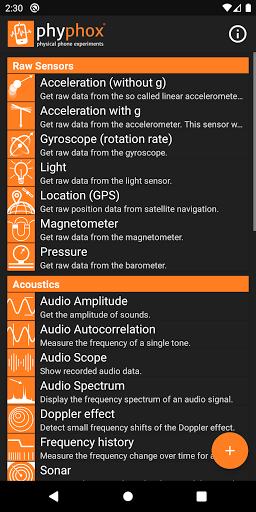
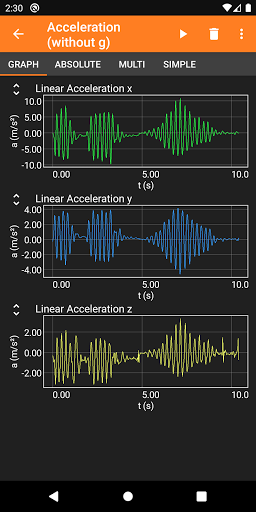
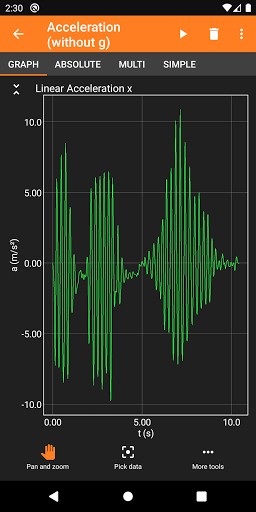
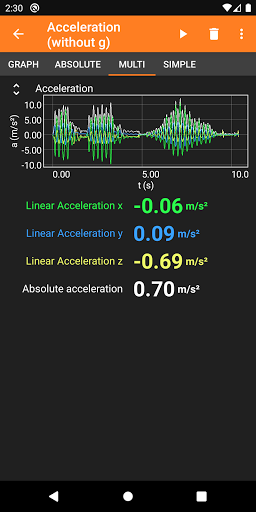
phyphox turns a smartphone into a portable physics lab by giving direct access to built‑in sensors (accelerometer, gyroscope, magnetometer, barometer, microphone, GPS, etc.), offering ready‑to‑run experiments, customizable experiment design via an online editor, real‑time visualization, remote control through a web interface, and easy data export (CSV/Excel).
Verdict
Verdict: A standout, university-grade sensor lab app that’s free, flexible, and classroom-ready, ideal for hands-on science and data logging.
Who is it for
Best for:
- Teachers and students needing classroom-friendly, real-time data collection and display
- Hobbyists, makers, and researchers who want customizable experiments and raw data export
- Anyone curious about measuring the physical world with phone sensors
Not ideal for:
- Users seeking polished, single-purpose apps (e.g., only sound meter or step counter)
- People without interest in data analysis or tinkering with experimental setups
- Advanced signal-processing needs like full spectrogram workflows out of the box
Real-world User Experience
Users like it:
Extremely versatile, well-organized, and simple to operate; excellent for classrooms thanks to browser-based remote control and live displays; impressive sensor access and precision (e.g., barometric pressure changes across rooms); ad-free, no bloat, and free.
Users complain about:
Some advanced visualizations are missing (e.g., carpet-style spectrogram over time); occasional feature wishes around deeper spectral analysis.
Is it Worth Paying For?
The app is completely free with no ads or in-app purchases, offering exceptional value—there’s nothing to pay for, and you still get pro-level features and data export.
How it Compares to Alternatives
Compared to Physics Toolbox Sensor Suite and Sensor Kinetics, phyphox stands out with its experiment-centric design, web-based remote control, and powerful custom experiment editor. Versus Arduino Science Journal, it offers broader sensor workflows and analysis functions out of the box, though some niche visualizations (like detailed spectrogram carpets) may require external tools.
Summary
phyphox is a top-tier educational and experimental toolkit that transforms a phone into a data-logging powerhouse. It pairs easy, ready-to-run experiments with deep customization via an online editor, supports numerous sensors, and provides clear visualizations plus robust CSV/Excel export. The browser-based remote control is a classroom game-changer, enabling live demonstrations without extra software. While a few advanced visualizations like carpet-style spectrograms aren’t built in, the overall feature set, polish, and zero cost—backed by RWTH Aachen University—make phyphox an outstanding choice for science education, hobby projects, and quick field measurements.
Ratings
Trending APP











Alternative to this app