
Copyright 2026 © swekartor. All Rights Reserved.



App Feature
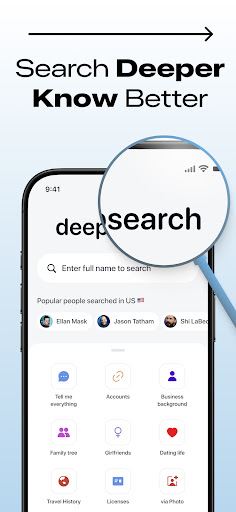
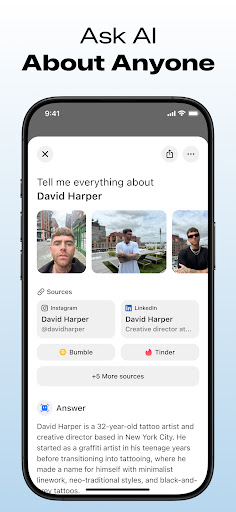
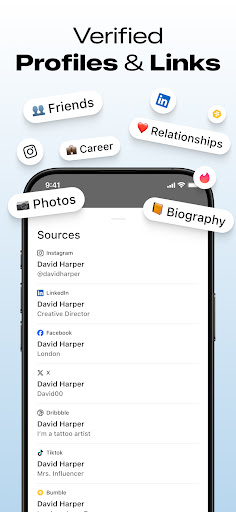
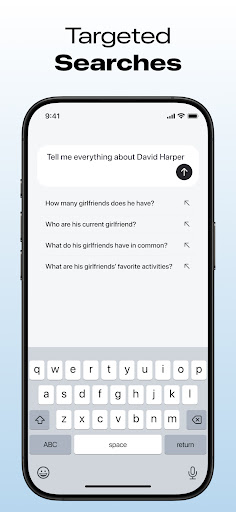
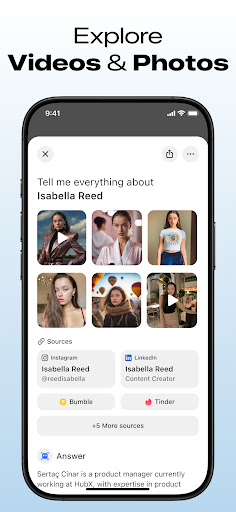
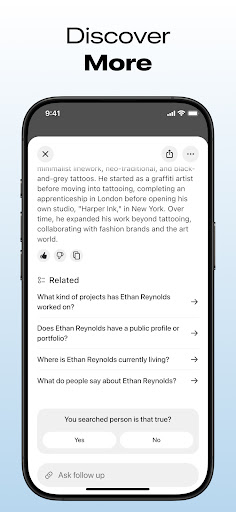
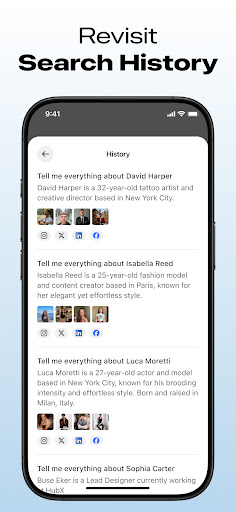
Deepsearch AI Search Assistant aggregates publicly available people data across the web, using AI to surface social profiles, online mentions, and basic background info in a single, searchable interface with history and trending searches.
Verdict
Verdict: Convenient if you want a single place to skim public profiles, but poor accuracy and paywalls make it hard to recommend over basic web searches.
Who is it for
Best for:
- Networking or recruiting users who want a quick, consolidated view of public profiles
- Casual lookups where rough, high-level info is sufficient
Not ideal for:
- Users needing reliable, verified background reports or investigative depth
- Budget-conscious users who expect meaningful free functionality
Real-world User Experience
Users like it:
Fast retrieval of public information in one place; occasionally useful as a starting point to find social accounts and professional mentions.
Users complain about:
Paywall reported almost immediately (around $6/month, $7 trial, or ~$36/year), results often inaccurate or mismatched, data no better—and sometimes worse—than a simple Google search, and marketing perceived as misleading about capabilities.
Is it Worth Paying For?
Only if you value the convenience of a single hub for public lookups and accept variable accuracy. Based on reviews, many users felt the subscription wasn’t justified because results were frequently wrong or duplicative of free Google searches.
How it Compares to Alternatives
Compared with manual Google/LinkedIn/Twitter searches or OSINT tools, Deepsearch trades precision for convenience but often returns less reliable results. Dedicated people-finder services (e.g., BeenVerified, Pipl) typically offer clearer data sources, more robust matching, and more transparent pricing—though they can be pricier. Free aggregators and search operators often equal or outperform it in accuracy with a bit more effort.
Summary
Deepsearch AI Search Assistant promises AI-powered people search that consolidates social profiles, mentions, and basic public info into a single, easy interface. In practice, user feedback highlights immediate paywalls, questionable accuracy, and output that frequently mirrors or lags behind a standard Google search. If you need a quick, consolidated skim of public information and don’t mind paying for convenience despite mixed reliability, it can serve as a lightweight tool. For most users seeking dependable results or real investigative depth without recurring costs, manual searches or more established people-finder services are likely better options.
Ratings
Trending APP












Alternative to this app