
Copyright 2026 © swekartor. All Rights Reserved.



App Feature
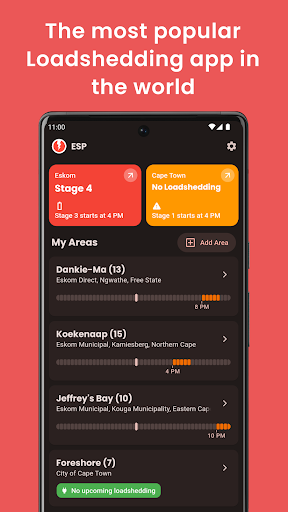
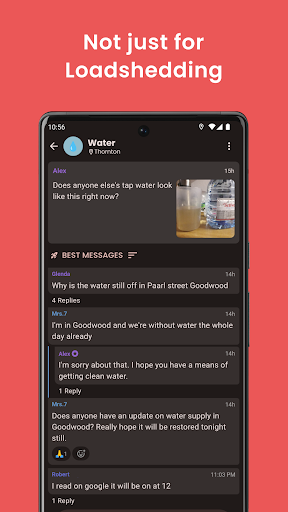
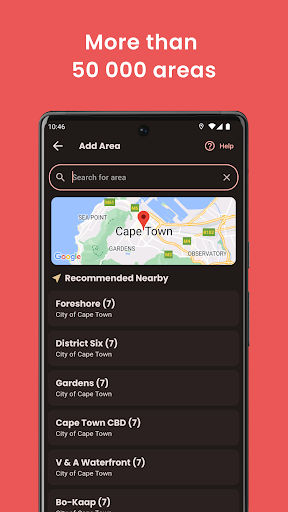
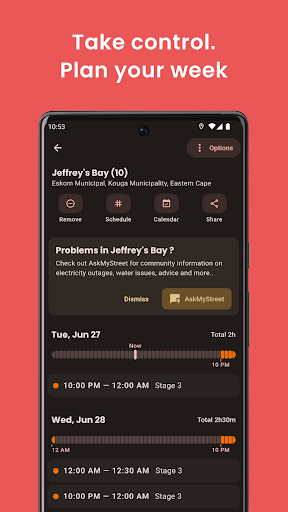
EskomSePush (ESP) tracks South Africa’s loadshedding by real suburb/area, sends timely push alerts (including the well-known 55‑minute heads‑up), lets you follow multiple locations, and adds hyperlocal community chats to confirm faults, share updates, and coordinate with neighbours.
Verdict
Verdict: The go-to loadshedding companion in South Africa, blending accurate schedules with useful alerts and hyperlocal community chat.
Who is it for
Best for:
- South Africans who need reliable, suburb-specific loadshedding schedules and reminders
- People coordinating across home/work/family areas or supporting less tech-savvy relatives
- Residents who value local chat to confirm faults, get quick answers, and share neighbourhood updates
Not ideal for:
- Users outside South Africa or those without a defined local municipality/zone
- Anyone expecting guaranteed-to-the-minute accuracy when Eskom or municipalities change plans suddenly
- People who want a completely ad-free experience without considering optional support/IAP
Real-world User Experience
Users like it:
Consistently praised for accuracy, fast stage-change alerts, and clear schedules by suburb; reminders (55 and 15 minutes) help planning; multi-area tracking is handy for family and work; the Ask My Street/local chat feature quickly confirms whether an outage is loadshedding or a fault; UI is intuitive and the app has improved steadily over years.
Users complain about:
Occasional late or duplicate notifications and confusion when stage changes coincide exactly with an outage slot; some users struggle to pick the correct zone without location assistance; requests for finer-grained notification controls (e.g., only outage alerts, not stage changes) and shorter pre-alerts; desire for offline cache when mobile data drops and for a one-time payment to remove ads.
Is it Worth Paying For?
The app is free with ads and optional IAP. The free version already delivers strong value (accurate schedules, alerts, and chat). If you rely on it daily or want to reduce friction (e.g., fewer ads) and support ongoing improvements, the optional purchase is worth it; otherwise, most users will be satisfied at no cost.
How it Compares to Alternatives
Compared with other South African loadshedding apps and municipal portals, ESP stands out for suburb-level accuracy, reliable push alerts, and its community chat that helps verify faults in real time. Many alternatives offer basic schedules or generic block lists but lack the polished notifications, multi-area tracking, and active local conversations. Some competitors may offer simpler UIs or different widgets, but ESP’s scale, data reliability, and community features make it the most rounded choice.
Summary
ESP (EskomSePush) turns loadshedding chaos into something manageable: suburb-accurate schedules, timely notifications, and a focused local chat to verify issues and share updates. Reviews highlight years of steady improvements, multi-area tracking for families and workplaces, and reminders that make planning far easier. Minor pain points—like occasional late/duplicate alerts, edge-case confusion during sudden stage changes, and requests for tighter notification controls or offline caching—stem largely from the unpredictability of the underlying grid and connectivity. As a free app with optional IAP, it’s excellent value and widely considered the default loadshedding app for South Africans who need reliable, practical, and community-driven information.
Ratings
Trending APP










Alternative to this app